The Packard Foundation is supporting organizations that help election officials prepare for and respond to physical, cyber, and operational threats while strengthening the shared infrastructure needed for safe, fair, and trusted elections.
In the United States, elections are the main way for citizens to influence their country’s path. They allow people and communities to voice their preferences and provide a critical form of accountability between elected officials and their constituents. They bring about shifts in leadership, new policies, and a vision for the future of our country.
The elections process itself — the actual casting, counting, and certification of ballots — is routine. But, ensuring that elections are run securely takes a lot of work.
Election officials like clerks, auditors, administrators, and volunteers are responsible for maintaining voter registration databases, training poll workers, certifying results, and protecting the process from threats. Though they often manage these responsibilities with limited resources, they’re essential stewards for our democratic process.
A Need for Increased Security
In recent years, election officials have been dealing with increasing physical and cyber threats to the election process. In 2024, 38% of local election officials reported threats, harassment or abuse, and more than one-third knew someone who had resigned at least partly because of safety concerns. Election Day and the days after saw at least 227 bomb threats against polling places and election offices. Election security organizations reported blocking of more than 138,000 malicious connection attempts from malware sites and incidents of phishing.
Over the past year, federal cuts to election security budgets and staff have created dangerous gaps in threat prevention resources, creating a critical need for additional support for protection.
In response to this need, the Packard Foundation provided $7.5 million in support for organizations leading the efforts to bolster election integrity in 2026 alongside other donors.
Though more funding is needed, this support is helping organizations not only prepare for and respond to threats but also strengthen the shared infrastructure election officials rely on like real-time reporting platforms, training, peer learning, shared resources, and partnerships that help jurisdictions anticipate risks and respond quickly.
This support complements the Packard Foundation’s ongoing grantmaking to strengthen democracy and protect civic institutions so that everyone has a voice in shaping our shared future. While the Packard Foundation’s democracy grantmaking primarily focuses on the long-term work of building civic culture and effective governance, our investment in election integrity reflects our recognition that safe elections are essential to a long-standing, functioning democracy in which fairness is upheld and disagreements are resolved peacefully.
“Our elections have been safe for decades because of the thousands of people working behind the scenes to monitor and respond to threats,” said Ben Chou, Democracy, Rights, and Governance Program Officer at Packard Foundation. “We’ve seen how their years of expertise, relationships, and infrastructure are crucial to safeguarding elections and the people who run them from harm.”
“Our elections have been safe for decades because of the thousands of people working behind the scenes to monitor and respond to threats."
Ben Chou, Democracy, Rights, and Governance Program Officer, The Packard Foundation
Safe and fair elections are critical to ensure that anyone who wishes to vote can do so, and their rights are protected.
Two Organizations Protecting the Vote
The Center for Internet Security
During the week of the 2024 election, a bomb threat via email forced the temporary closure of a polling location in San Jose, California. Within minutes, election officials had evacuated the building, called law enforcement, and were able to renew counting ballots within hours. The official knew how to respond to the suspicious email with appropriate action and maintain the validity of the votes being tallied. This preparedness is credited, in part, to the Center for Internet Security’s Election Infrastructure Information Sharing and Analysis Center which had spent the preceding year helping election officials build relationships with local law enforcement and prepare for physical and cybersecurity problems.
The Center for Internet Security (CIS) — which operates both the Elections Infrastructure Information Sharing and Analysis Center (EI-ISAC) and its sister organization, the Multi-State ISAC (MS-ISAC) — is unique among threat intelligence providers in that it is focused exclusively on threats to state, local, tribal, and territorial organizations, including the infrastructure and personnel that secure our elections.
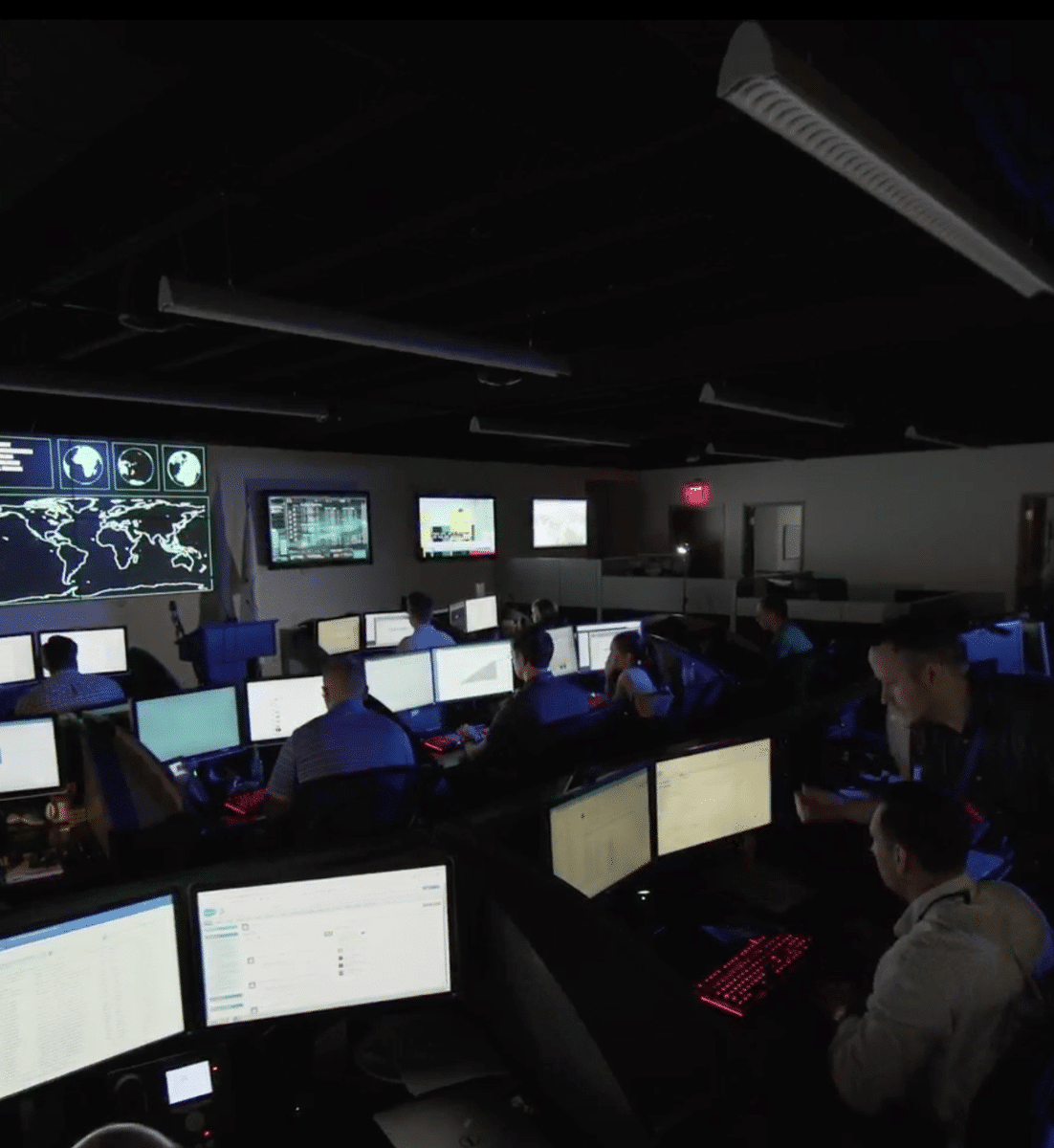
CIS expert intelligence analysts report in near real-time on multidimensional threats — across cyber, physical, and information operations. In addition, CIS provides incident response, real-time monitoring, custom threat signatures, and other technical cybersecurity services, including proactive vulnerability assessments and network penetration tests that allow state and local officials to learn from each other’s experiences and proactively defend themselves from emerging threats.
CIS security operations teams work cohesively with MS- and EI-ISAC members to monitor and protect against malware, ransomware, and other unauthorized access to critical systems and data and provide threat intelligence derived directly from the membership community and key partners. Thousands of EI-ISAC members nationwide obtain immediate access to shared resources including a virtual “Situation Room” where officials can communicate directly with cybersecurity experts from the time polls open through certification of results.
“Election officials carry an enormous weight of responsibility, and they need access to a nationwide cyber defense network in the Elections Infrastructure Information Sharing and Analysis Center with the tools and resources to protect the integrity of our elections,” said Marci Andino, Vice President, EI-ISAC, Center for Internet Security. “The more election offices we can reach and support, the stronger the security picture becomes for everyone.”
"Election officials carry an enormous weight of responsibility."
Marci Andino, Vice President, EI-ISAC, Center for Internet Security
Election Security Exchange
Earlier this year, in Palm Beach County, Florida, a long-time poll worker who was training for the March primary was arrested and charged with stealing computer equipment. After an electronic key to an e-pollbook kiosk was stolen, staff consulted the security video to identify the suspect, and the kiosk was taken out of service for that election.
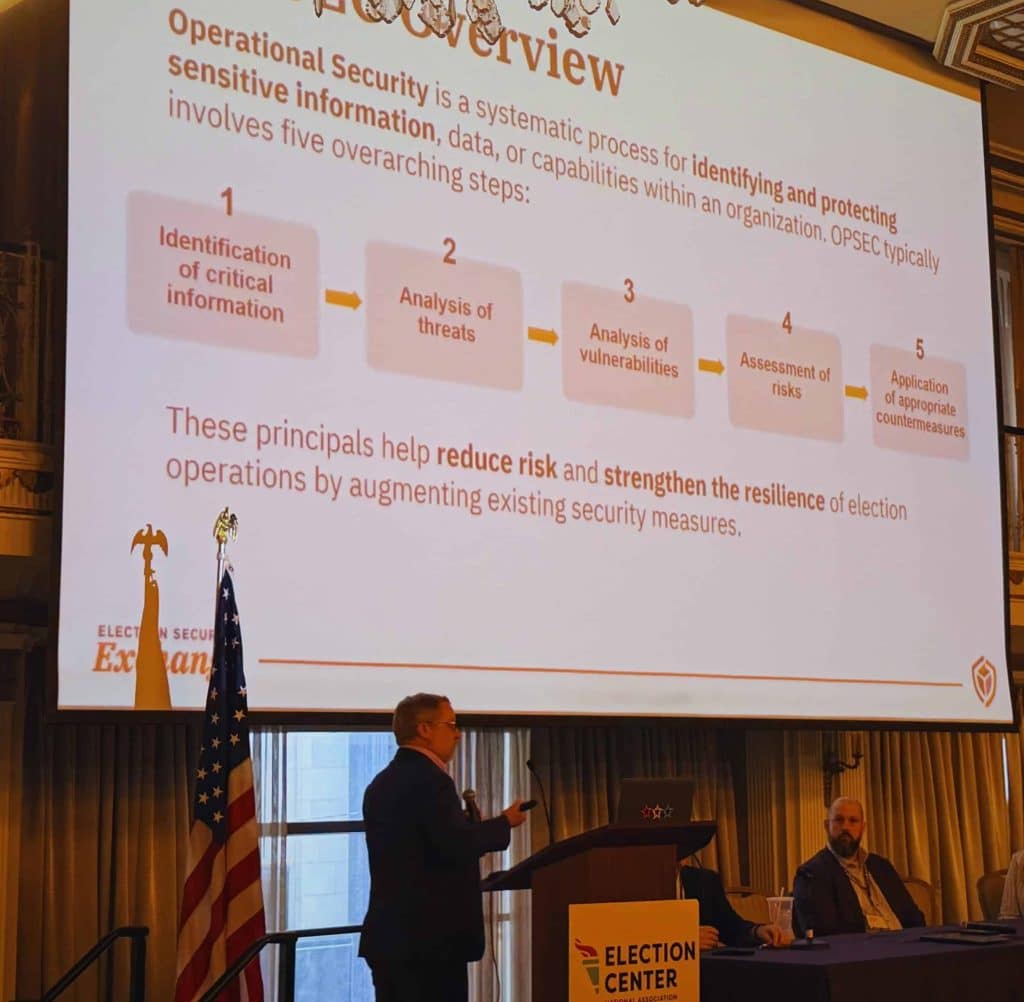
This is the kind of threat the Election Security Exchange, launched in January 2026 as a project of The Election Resource Center, Inc., was created to help election officials anticipate and prevent.
When international cyber activity posed a credible risk to U.S. election infrastructure, the Exchange published direct advisories telling officials exactly what the threat meant for them and what to do about it — the kind of sector-specific clarity that broad federal alerts rarely provide.
Its resource library, weekly newsletter, and countdown planning desk help jurisdictions of every size stay ahead of risks as Election Day approaches and bolster their cyber, physical, and operational security.
“Election officials are some of the most resilient, resourceful people I know, and they’re natural planners,” said Andrea Byrne, Executive Director for Election Security Exchange. “Our job is to make sure they have the right tools and knowledge built into their plans before threats materialize.”
"Election officials are some of the most resilient, resourceful people I know, and they're natural planners,”
Andrea Byrne, Executive Director for Election Security Exchange
A Safe and Fair Future
Democracy is how we decide what kind of country we want to live in. Safe and trusted elections are necessary to foster a deeper belief in democracy for the future of the United States.
The Center for Internet Security and The Election Resource Center Inc dba Election Security Exchange are both nonpartisan 501(c)(3) nonprofit organizations.