Archive for the ‘Packard Fellowships for Science & Engineering’ Category

2012 Packard Fellowships in Science and Engineering Awarded to Sixteen Researchers

October 15th, 2012

October 15, 2012 (Los Altos, CA) – —The David and Lucile Packard Foundation has named 16 scientific researchers from universities across the country as the 2012 recipients of the Packard Fellowships for Science and Engineering. Each Fellow will receive an unrestricted research grant of $875,000 over five years.

“The Packard Foundation is fortunate to be able to award this Fellowship to these talented researchers. Their important work has the ability to profoundly impact the lives of their students and all of us in the world at large,” said Lynn Orr, Keleen and Carlton Beal Professor at Stanford University, and Chairman of the Packard Fellowship Advisory Panel. “For 25 years, my colleagues and I at the Foundation and on the Advisory Panel have been inspired by the Packard Fellows’ creativity, leadership in their fields and important breakthroughs in science and engineering.”

The 2012 Fellows were selected by the Packard Fellowship Advisory Panel, a group of 12 nationally-recognized scientists and engineers, and approved by the Packard Foundation Board of Trustees, from a field of 98 researchers nominated by presidents of 50 universities that participate in the Packard Fellowship program.

The Packard Fellowship program was established in 1988 to allow the nation’s most promising professors to pursue science and engineering research early in their careers with few funding restrictions and limited reporting requirements. The program arose out of David Packard’s commitment to strengthen university-based science and engineering programs in recognition that the success of the Hewlett-Packard Company, which he cofounded, derived in large measure from the research and development in university laboratories.

“David Packard, my father, loved science and engineering – and scientists and engineers. He believed deeply in their importance to our future as a nation and a world,” said Susan Packard Orr, board chair of the Foundation. “One of his beliefs that motivated both his business philosophy and philanthropic efforts was his trust in the individual. Hire extraordinary people, give them some tools and resources, and let them invent the next great thing.”

By supporting highly innovative professors early in their careers, the Foundation hopes to support scientific leaders, helping to further their promising work in science and engineering and encourage their efforts to train the next generation of scientists.

Over the past 25 years, the Packard Fellowships program has awarded $316 million to support 489 faculty members from 52 top national universities. It is among the nation’s largest nongovernmental fellowships, designed with minimal constraints on how the funding is used to give the Fellows freedom to think big and look at complex issues with a fresh perspective. Packard Fellows have gone on to receive additional awards and honors, including the Nobel Prize in Physics; the Fields Medal; the MacArthur Fellowships; and elections to the National Academy of Sciences and the National Academy of Engineering.

Packard Fellows must be faculty members who are eligible to serve as principal investigators engaged in research in the natural and physical sciences or engineering, and must be within the first three years of their faculty careers. Disciplines that are considered include physics, chemistry, mathematics, biology, astronomy, computer science, earth science, ocean science, and all branches of engineering.

Click here to see the recipients of the 2012 Packard Fellowships in Science and Engineering.

Reflections from Susan Packard Orr on her father’s 100th birthday

September 13th, 2012

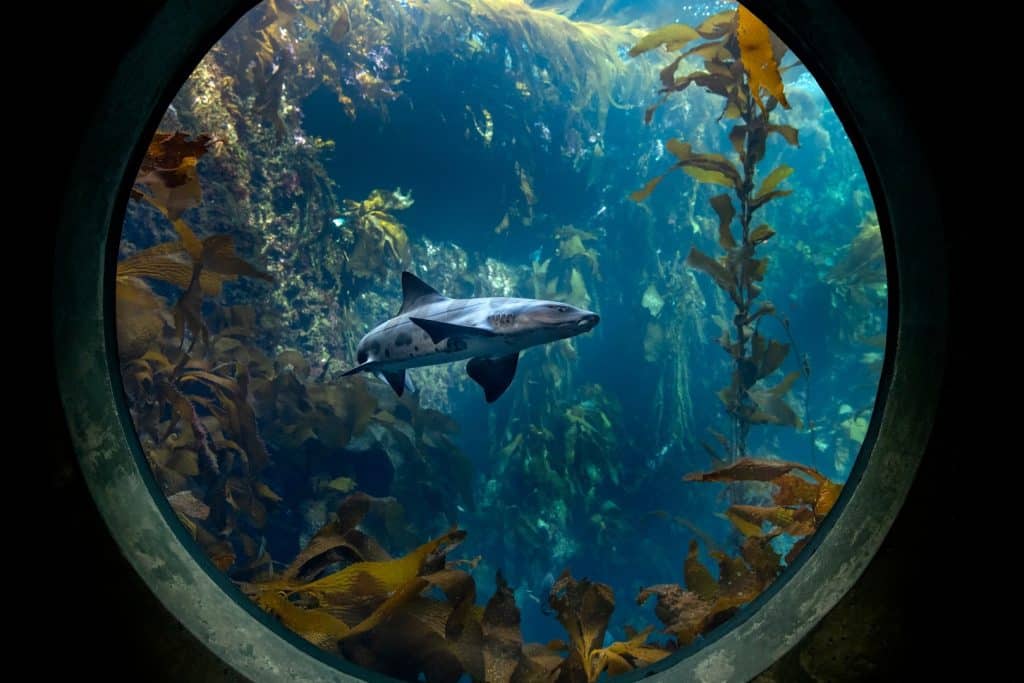
During the first week of September, the David and Lucile Packard Foundation hosted the annual meeting of the Packard Fellows for Science and Engineering at the Monterey Bay Aquarium. The Packard Fellows, some of the nation’s most promising professors who are conducting cutting edge research in natural and physical sciences and engineering, gather to share their work and engage in discussion with their colleagues.

This year, the meeting coincided with David Packard’s 100th birthday.  Susan Packard Orr, chair of the Packard Foundation and daughter of David Packard, reflected on her father’s love of the Fellows Program and the importance of the creative pursuit of science in our society.

“Good evening everyone. This gathering is such a joy every year, and especially this year because tomorrow marks the 100th anniversary of my father’s birth, David Packard, who was born in Pueblo, Colorado, on Sept. 7, 1912.

Every year, from 1988 when the first Fellows were named until his death in 1996, Father attended the Packard Fellows meeting and he listened to, and understood, every single presentation.  And frequently the meetings coincided with his birthday.  The Aquarium echoes with the memory of a hearty rendition of Happy Birthday from the assembled fellows.

David Packard loved science and engineering – and scientists and engineers. And he believed deeply in their importance to our future as a nation and a world.

I heard him say in numerous speeches near the end of his life that all progress made in the 20th century was based on science done in the 19th century.

From the earliest days the Packard Foundation funded programs to support scientists and engineers – from scholarship support for minority engineering students in the 1970s to support for building science and engineering programs at Historically Black Colleges and Universities and the founding of MBARI and the Packard Fellows Program in the 1980s.

The Foundation continued our deep investment in science through programs fostering interdisciplinary and international science in the 1990s and in marine science through a number of efforts, including PISCO – Partnership for Interdisciplinary Study of Coastal Oceans, the Aldo Leopold Leadership Program and COMPASS – the Communications Partnership for Science and the Sea.

Father’s support of science was not just through the Packard Foundation.

He also gave generous support to Stanford, his alma mater, to build their programs.

As early as 1945, he made gifts to the Electrical Engineering department. These were just the start of decades of consistent support for science and engineering, culminating with a pledge near the end of his life to replace the old buildings with a new science and engineering quad that is finally nearing completion.
And in honor of their mentor, Fred Terman, Father and Bill Hewlett created the Terman Fellows at Stanford, modeled after our own Packard Fellows.

Finally I must note that this belief in the power of science and engineering did not just motivate his philanthropic efforts – it was fundamental to the success of the Hewlett Packard Company – the source of the wealth that enabled all of these good works.

If you have read any of the books about HP, you know that it was driven by trust in the individual – hire extraordinary people, give them some tools and resources, and let them invent the next great thing.

Not unlike the Packard Fellows, actually.

This was in the DNA of the company from the beginning, but was solidified in 1966 when Dave and Bill created HP Labs.

Here are a few things that came out of HP labs:
• 1966 – First commercially available LED
• 1967 – Cesium beam atomic clock sent to Greenwich to keep the world’s time
• 1968 – First programmable scientific desktop calculator
• 1972 – First pocket scientific calculator, making the slide rule obsolete
• 1979 – Fused silica capillary columns for gas chromatography which revolutionizes chemical analysis
• 1980 – First commercial laser printer for general office use
• 1984 – First low cost inkjet printer, spelling the end of the dot matrix printer

And the list goes on and on.

So in this time when so many politicians proclaim that they don’t believe in evolution, much less climate change, when in some quarters science is no longer revered as the engine of progress, it’s even more important to honor people like David Packard.

Of course your work, and the work of your fellow Fellows, is the best way to honor him.

But perhaps you can also come out of your labs and classrooms now and then to proclaim the importance of the scientific endeavor to our future and the future of our earth.”