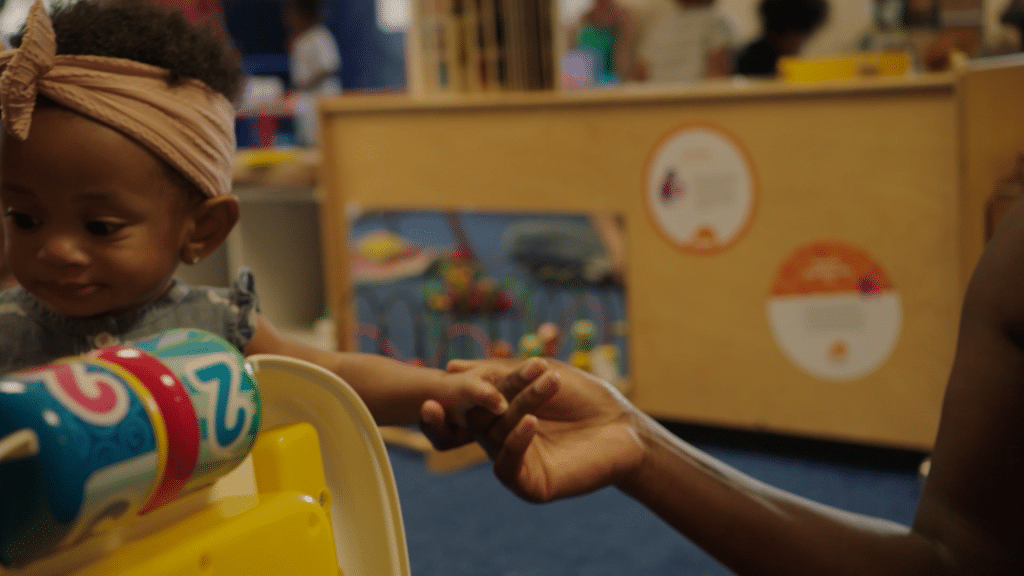
While children are born with innate talents and temperaments, research demonstrates that the quality of the interactions they experience with their parents and other caregivers in the early years is truly formative. A strong and growing body of evidence shows that a good early education can engage and support parents while also providing preschoolers with experiences that are rich in literacy and language, full of social and emotional discovery, and secure with positive relationships among children and adults.
Many parents have the financial means to ensure their children attend high-quality early education programs. Too many families, however, face challenges, especially in a global economy that demands higher and higher levels of education for children to achieve lifetime success. Research conducted by grantee RAND Corporation concluded that just under half of California’s 3- and 4-year-olds from economically disadvantaged families are in preschool programs of any quality, compared with 70 percent of those in more well-off families. Only 15 percent of disadvantaged children attend a preschool that meets the high educational standards known to make a lasting difference.
Armed with this knowledge, and building on the Packard Foundation’s four decades of investments in the early years, the Preschool for California’s Children subprogram began in 2003. The subprogram’s goal is long-term and ambitious—to provide access to voluntary, high-quality preschool for all 3- and 4-year-olds in California, starting with the children who need it most.
The Preschool for California’s Children strategy aims to change those odds through a decade-long commitment to:
- Advocacy
- Policy change
- Systems building, and
- Implementation of quality programs.
The Foundation’s grantmaking strategy, Preschool for California’s Children, is grounded in decades of evidence supporting the benefits of high-quality preschool, in addition to various studies that detail the needs of California’s preschool-aged children and preschool programs.
The Foundation does not fund projects that influence specific legislation or ballot measures. We also do not fund direct service programs (i.e., individual child care centers, preschools, or schools) or research unrelated to specific needs identified by program staff in consultation with grantees in the field.