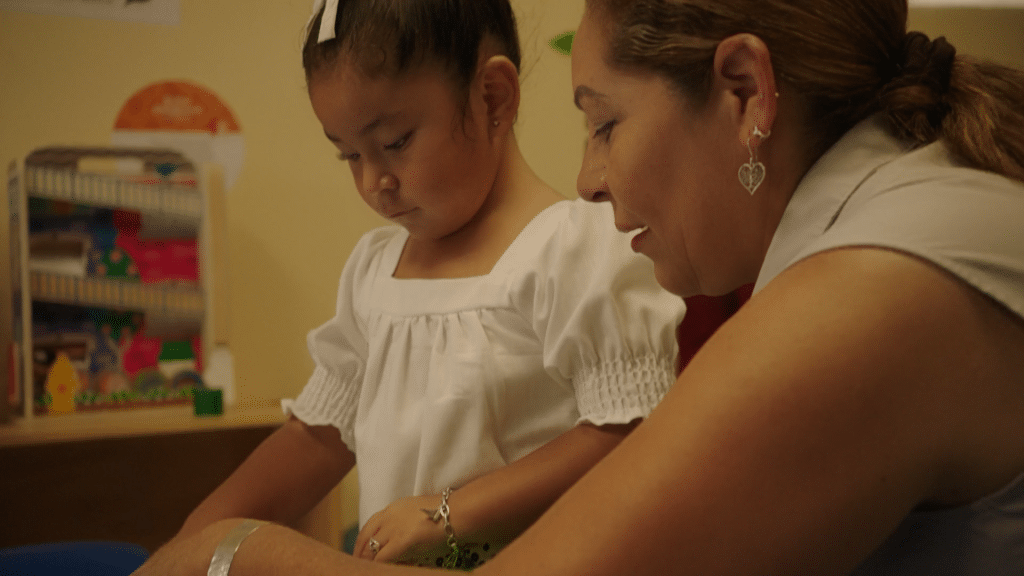
Health-E-App Public Access: A New Online Path to Children’s Health Care Coverage in California, Outreach to Low-Income Families During the First Year of HeA PA
This is the third brief in a series about the first year of California’s Health-e-App Public Access (HeA PA) enrollment system, introduced in December 2010. HeA PA, available in English and Spanish, was designed as a self-service online application for the Healthy Families Program and a screening tool for Medi-Cal for families. In 2011, California received about 4,000 HeA PA applications per month, or about 20 percent of all applications submitted to the state processing center that year. This brief describes the ways that California made families aware of HeA PA, including a formal outreach campaign during the second half of 2011, and evaluates the effectiveness of those outreach strategies at attracting eligible applicants.
Health-E-App Public Access: A New Online Path to Children’s Health Care Coverage in California, Applicant Characteristics and Experiences – Brief 2 (released February 2013)
The second brief in the series describes HeA PA applicants and their experiences with the self-service tool. HeA PA users do not differ much from users of paper or assisted online applications except for a strong preference to communicate in English over Spanish. HeA PA users are internet savvy: roughly 90 percent said they use the internet at least three times per week and nearly all have access to a high-speed internet connection. For states that are building or updating their enrollment systems, the California experience suggests that tools like HeA PA are a good option for applicants who are internet savvy, have convenient access to a high-speed internet connection, and do not need extensive in-person help when applying for coverage.
The Narrative Communications Project: Takeaway Findings on a Message-Framing Approach – Brief 4 (released November 2012)
The fourth and final brief in the series documents how IAC advocacy grantees were able to reframe the children’s coverage debate using specific message sets to change the conversation. This study demonstrates the importance of strategic investments, as well as lessons for advocates, funders and communications professionals, on the value of message framing and an advocacy strategy rooted in a positive, “glass-half-full” approach. The approach in conjunction with tailored technical assistance changed the conversation in the media and policy discussions in 73% of the states in which Packard invested. Significantly, these messaging successes were frequently followed by gains in children’s coverage.
Health-E-App Public Access: A New Online Path to Children’s Health Care Coverage in California – Brief 1 (released March 2012)
The first brief in the series provides an overview of the first year of California’s Health-e-App Public Access (HeA PA) enrollment system. HeA PA, which launched in December 2010, is designed to facilitate enrollment of children and pregnant women in California’s Medi-Cal and the Healthy Families Program. This brief provides encouraging information about the potential impact of HeA PA and other online applications tools. Its use was associated with a 14% increase in total applications submitted, about a quarter of which were submitted outside of regular business hours. HeA PA applications were more likely than paper applications to be complete and include required documentation.
Addressing Barriers to Health Insurance Coverage Among Children: New Estimates for the Nation, California, New York, and Texas (released May 2012)
Maximizing health insurance coverage for children under the Patient Protection and Affordable Care Act(ACA) will require addressing the complex scenarios that prevent some children from obtaining or retaining coverage. These scenarios include situations where children are eligible for Medicaid or CHIP but their parents are not, as well as those where children are living without at least one of their parents. This brief provides national estimates of the number of children in these complex coverage scenarios as well as state-level estimates for California, New York, and Texas. The data also indicate that even at present before implementation of the ACA children facing at least one complex scenario are more likely to be uninsured than other children and account for more than 60% of all uninsured children.
Applying Advocacy Skills in Tumultuous Times: Adaptive Capacity of Insuring America’s Children Grantees – Brief 3 (released April 2012)
The third brief in the series documents how the IAC advocacy grantees responded to the unprecedented changes seen in the children’s coverage landscape over the past several years. Advocates assumed new and expanded roles with-in coalitions and expanded partnerships with non-traditional allies, strengthen their roles as critical sources of information, used consistent, positive messages to gain traction in a challenging economic and political environment, and took full advantage of the technical assistance and peer-to-peer learning provided by the Insuring America’s Children grantmaking strategy.
The State of Young America
Today’s 20-somethings are the first generation, as a whole, to face downward economic mobility compared to their parents’ generation, according to a new report from national policy center Demos and youth advocacy organization Young Invincibles. This report reveals the failure of public investment and public policy to provide young people with the means to achieve economic security and sustain the middle class.
State-Based Advocacy as a Tool for Expanding Children’s Coverage: Lessons from Site Visits to Six IAC Grantee States – Brief 1 (released July 2010)
This brief summarizes key findings gleaned from site visits to six states with IAC grantees. It discusses the impact of persistence and creativity in effective state-based advocacy and the importance of building strong, broad-based coalitions including grassroots and state-level stakeholders. While acknowledging that much work remains, the brief cites important gains in children’s coverage realized since the IAC efforts began, despite the economic downturn.
Strategic Engagement of Policymakers is Key to Advancing a Children’s Health Care Coverage Policy Agenda – Brief 2 (released July 2010)
This brief studies the relationships between grantees and key policymakers, and the importance of these contacts in advancing the cause of children’s health care. Key strategies for establishing these important relationships include understanding states’ unique political environments, identifying, nurturing, and supporting political champions, creating effective, appealing messages for policymakers, and establishing advocacy groups as the “go-to” resource for reliable data and information.