Edward Chuong, a 2020 Packard Fellow at the University of Colorado Boulder, studies how ancient viral sequences embedded in our genome reactivate in cancer—research made possible by the Fellowship's flexible funding that allowed him to pursue unexpected scientific directions.
When Packard Fellow Edward Chuong was starting college, the first-ever sequence of the human genome was released. For Chuong, the opportunity to explore this newly cracked code to life drew him into the field of bioinformatics – a combination of computer science with biology.
Chuong became fascinated with the highly repetitive sections of the genome (called transposable elements) that made computational analysis difficult. He learned that these sequences were fragments of ancient viruses that had invaded the human genome over millions of years and embedded in human DNA. Though the viruses themselves were long dead, these genetic sequences can still move around, sometimes affecting how nearby genes work.
"Seeing the genome as this battlefield of genetic conflict in a way really just captivated me and that's been the core of my research interests ever since.”
Edward Chuong, 2020 Packard Fellow
Today, Chuong’s lab at the University of Colorado Boulder studies these transposable elements — which make up over half of the human genome — to understand how they relate to health and biology and disease.
This deeper understanding of what’s in human DNA could have implications for treating disease. His recent work points to transposons as players in cancer-related gene regulation, including in colorectal cancer, and his current cancer-immunology work is exploring whether these ancient viral fragments could become useful therapeutic targets or help explain why patients respond differently to treatment.
In 2020, Chuong received a Packard Fellowship for Science and Engineering, which awards early career scientists, engineers, and mathematicians with funds they can use in any way that supports their goals over five years. This gives the Fellows the flexibility to pursue groundbreaking research that not only advances their field of study, but also the well-being of people and nature.
And in 2024, he made a discovery that would shift the direction of his lab. The ancient viral sequences he had been studying from an evolutionary perspective were also active in cancer cells, helping tumors resist treatment.
“I essentially called up my oncologist friends at the medical school, and we started talking and writing papers and grants together,” said Chuong.
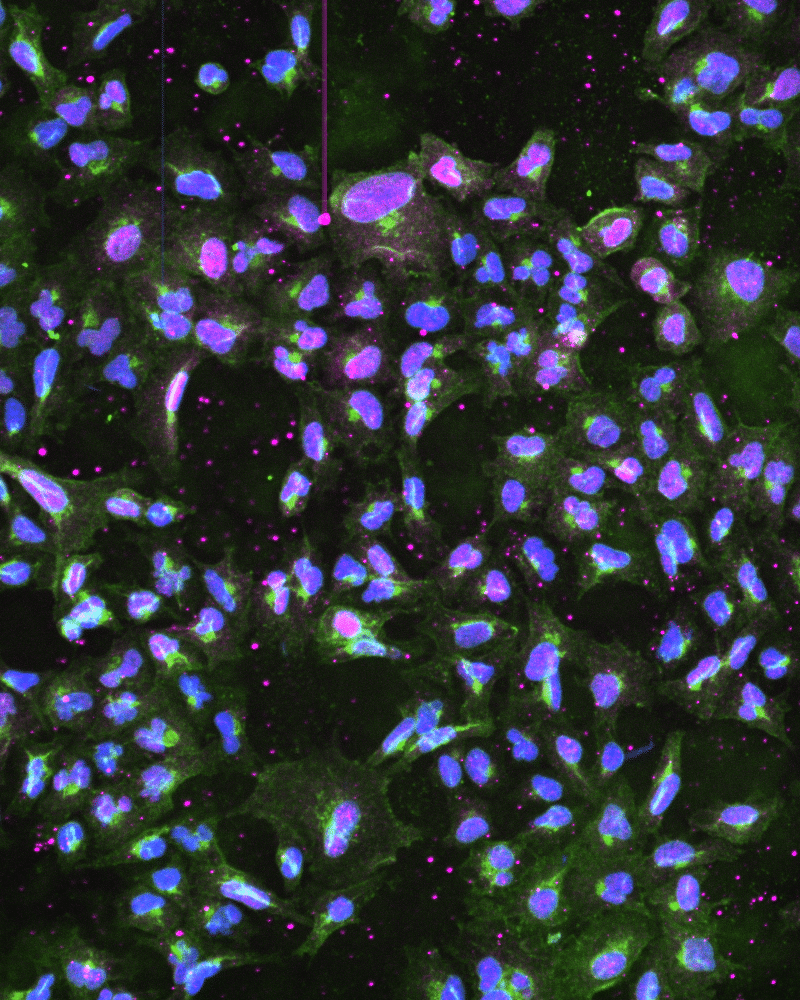
While the viruses themselves are long dead, many of the genetic sequences still retain the ability to act as genetic switches that control nearby human genes.
In healthy cells, these sequences are usually silenced. But in diseases like cancer and aging, those defenses break down, and the sequences wake up. Chuong’s team discovered that in colorectal cancer, an ancient retrovirus was required to turn on a DNA repair gene that helps cancer cells survive chemotherapy and radiation. When they removed that single viral sequence from cancer cells, it made those cells more sensitive to radiation therapy.
Today, more than half of Chuong’s lab works on cancer, an example of how basic research can lead to transformative breakthroughs that affect people’s lives.
Chuong’s team is also exploring whether transposon-derived switches could help enhance immunotherapies or explain why some patients respond to treatment while others don’t.
“The flexible funding of the Packard Fellowship really spoke to me as a researcher because, as a basic science researcher, I don’t necessarily have a specific disease in mind that I’m aiming to target or cure,” said Chuong. “Having that breathing room to think freely about my projects has been amazing.”
Since its inception, the Packard Fellowships have awarded more than $530 million to support more than 735 scientists and engineers across an array of disciplines. As the world faces more complex challenges, supporting visionary thinkers is essential to a future where people and nature flourish.
Learn more about the Packard Fellowships for Science and Engineering.