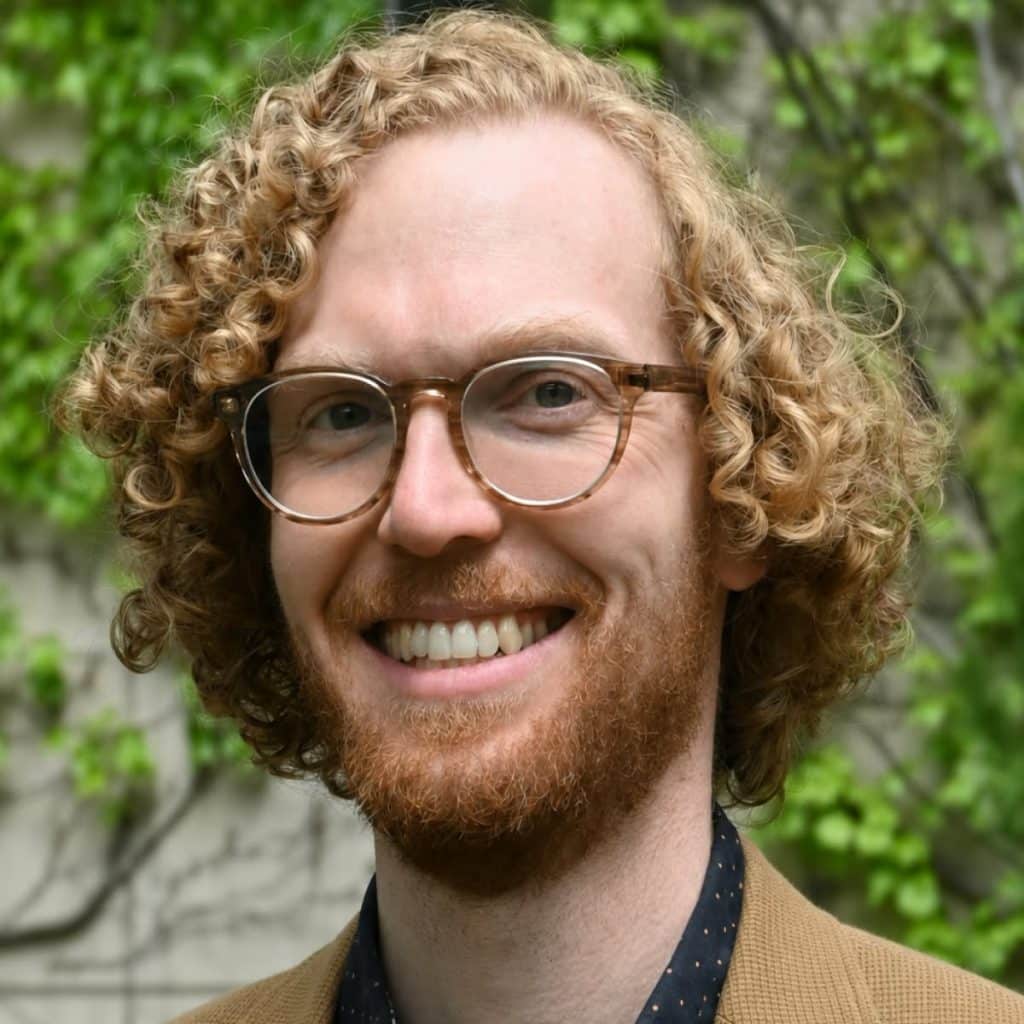
In feats of self-organization, developing tissues reliably construct precise 3D organ shapes despite stochasticity in molecular signals and cellular behaviors. How this reproducibility emerges has long remained elusive. I propose that physical forces generated by cells—pushes, pulls, and torques—act as an error-correcting layer that stabilizes organ shape as it forms. These interactions drive tissues toward stable attractor states, and outcomes can be biased or switched by perturbations. My lab integrates advanced microscopy, genetics, and mathematical modeling to measure how forces shape organs over time. Our goal is to define the rules governing force generation and coordination across tissues, and determine how this process breaks down under environmental stress. Together, this work will establish general principles for how living systems build and regulate complex three-dimensional structures, enabling prediction—and ultimately control—of tissue self-organization.
Awards and Achievements
- NIH NIGMS R35 MIRA ( 2026-present)
- NIH K99/R00 Award, NICHD ( 2023-2027)
- Best Talk, Developmental Biology Gordon Research Seminar ( 2023)
- Helen Hay Whitney Foundation Fellowship ( 2020-2023)
- Clare Waterman Award, Cell Signaling & Adhesion Gordon Research Conference ( 2022)
- Otis Williams Postdoctoral Fellowship ( 2019-2020)
- Springer Thesis Award ( 2019)
- Yodh Prize, University of Chicago ( 2017)
- Best Poster, Soft Condensed Matter Gordon Research Seminar ( 2017)
- Robert A. Millikan Fellow, University of Chicago ( 2015-2016)
- Robert G. Sachs Fellow, University of Chicago ( 2013)
- Wentzel Teaching Prize, University of Chicago ( 2013)
- NSF GRFP Honorable Mention ( 2013)
- McCormick Fellow, University of Chicago ( 2012-2014)
- David B. Fossan Endowed Scholar, for excellence in Physics ( 2011-2012)
- Buntrock Regent Scholar, St. Olaf College ( 2008-2012)
- National Merit Scholarship ( 2008-2012)