MBARI scientists recently returned from a seven-day expedition in Antarctica exploring how groundwater and gases like methane are moving under the seafloor are impacted by a rapidly warming polar environment. Working aboard the Spanish polar research vessel Hespérides, the team focused on the Bransfield Basin in the northern Western Antarctic Peninsula, a region that is experiencing some of the fastest warming in the Southern Hemisphere. Their work was the first controlled-source electromagnetic survey in the region, a method that mapsrock layers and the fluids they contain at depths ranging from shallow to several kilometers.
“Beneath Antarctica’s seafloor, groundwater and gas move through what is essentially an underground plumbing system. As these fluids move around, they may sculpt the seafloor and sub-seafloor, creating conditions that can support various kinds of marine life,” said MBARI Senior Scientist Aaron Micallef, who led the expedition. “These systems are incredibly important, but their processes remain poorly understood in much of the Southern Ocean.”
These hidden groundwater and gas pathways matter because they can move heat, fresh water, and dissolved chemicals between the continent and the ocean. As the region warms, changes in these flows can alter ocean circulation and the ocean’s ability to store carbon, both of which help regulate Earth’s climate. They can also influence whether methane stays trapped in sediments or escapes into the water column, shaping the global carbon cycle and climate change.
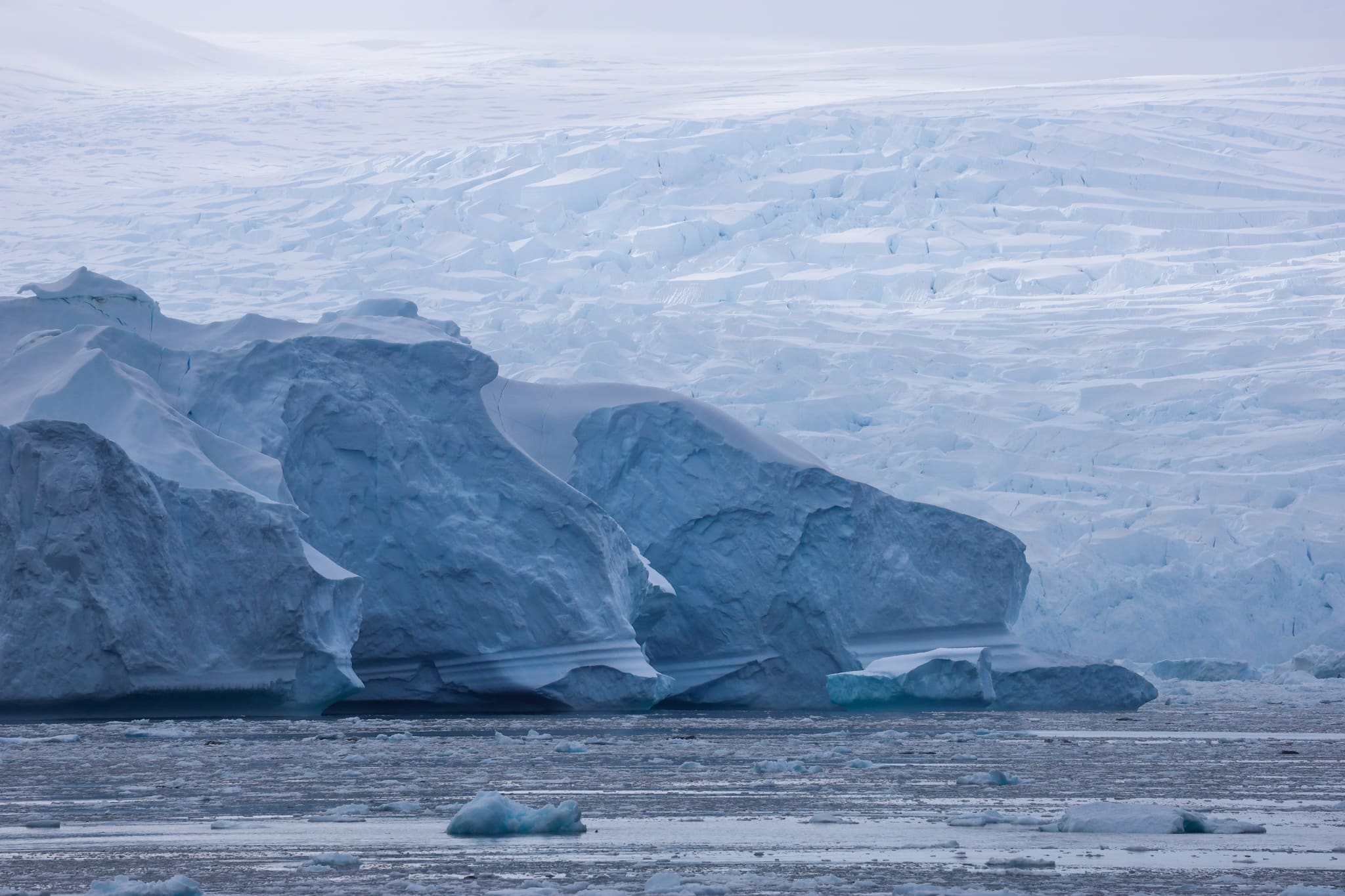
The Western Antarctic Peninsula is experiencing rapid warming due to climate change, but geologists have many unanswered questions about how melting ice affects seafloor ecosystems. Photo Credit: Aaron Micallef / MBARI
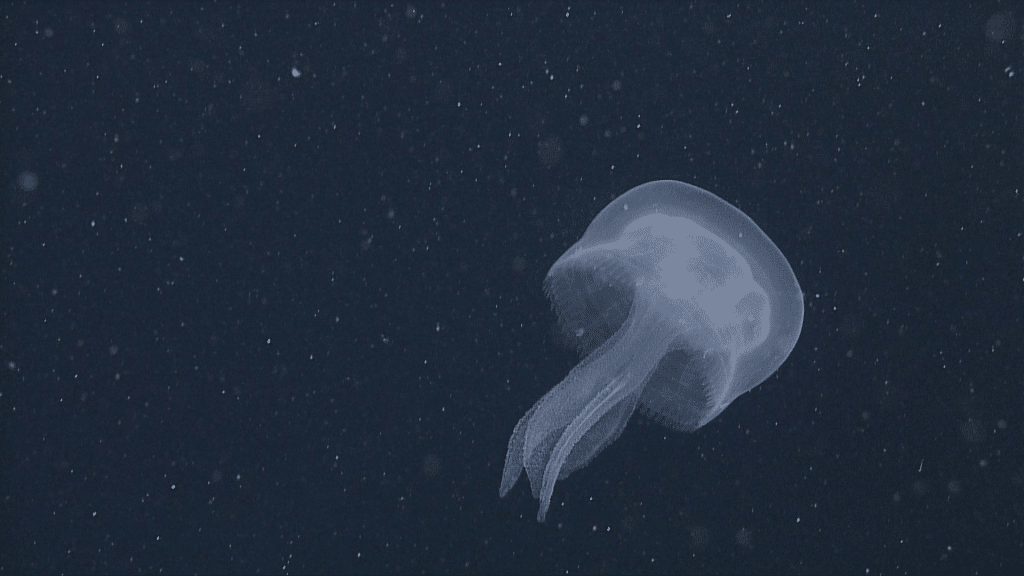
The research team conducted high-resolution mapping of the seafloor, collected water and sediment samples, deployed a marine controlled-source electromagnetic (CSEM) system, and surveyed seafloor communities with a remotely operated vehicle (ROV). These tools provided a comprehensive picture of seafloor geology and ecosystems to help researchers better understand how fluids move through the Antarctic seafloor and how past ice dynamics and ongoing climate change may influence that movement.
“It will take months to fully interpret what we mapped and sampled here, but it is already clear that these seafloor systems hold critical clues about marine hydrogeology, deep-sea ecosystems, and the stability of Antarctic seafloor in a warming world,” said Micallef.
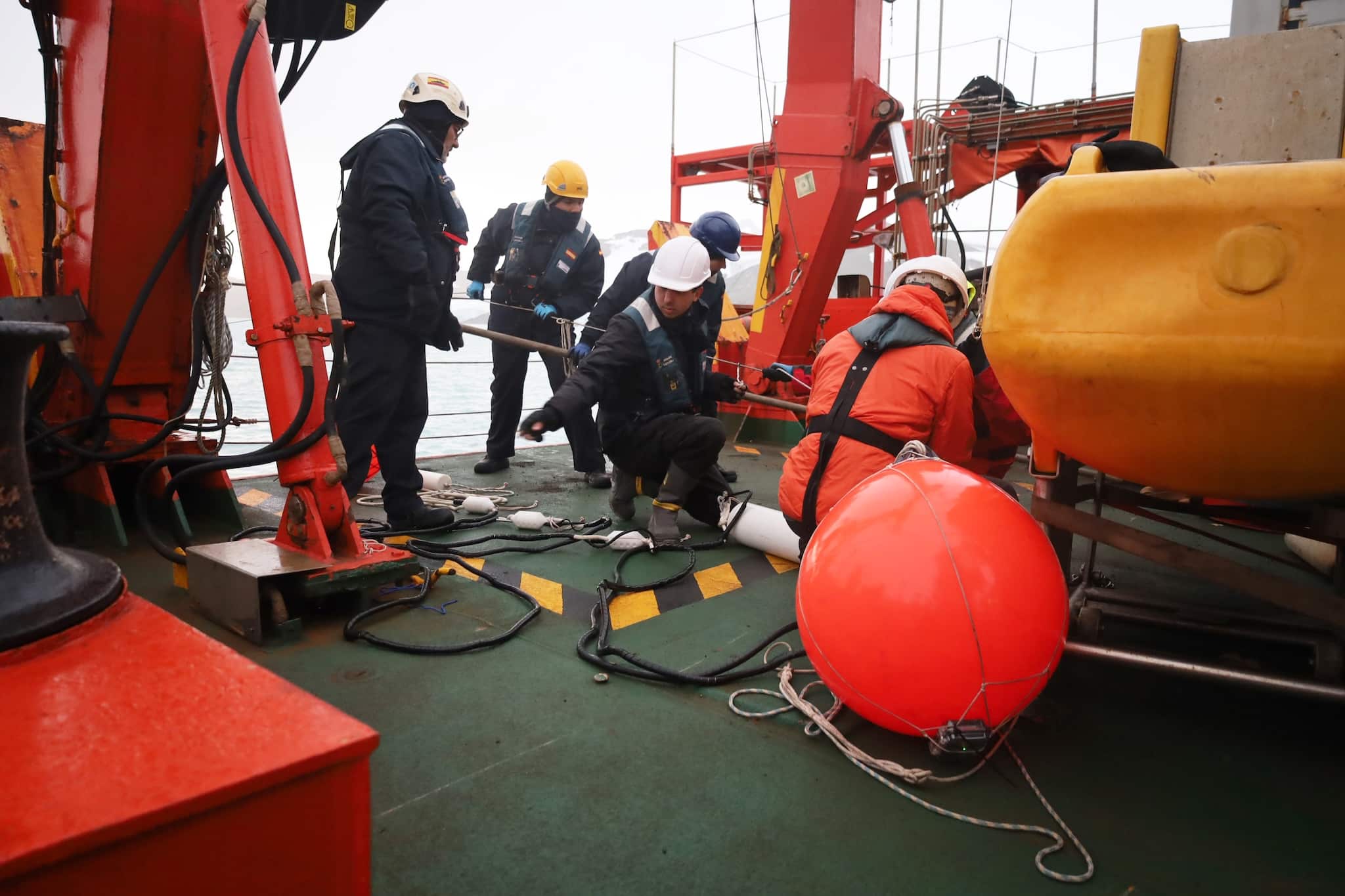
During the January 2026 FLAIR expedition aboard the Spanish polar research vessel Hespérides, MBARI researchers and an international team of collaborators studied how a warming climate may be affecting seafloor processes in Antarctica. Photo Credit: Aaron Micallef / MBARI
MBARI researchers and their collaborators will now begin to analyze this trove of data. Their findings will help establish a critical baseline for assessing how continued climate warming may influence polar shelf environments. In a region where small changes can cascade through ecosystems, this data will make it easier to detect climate-driven shifts over time and strengthen the models used to anticipate impacts on the ocean and the global climate system. From the Arctic to the Southern Ocean, MBARI research and technology are helping answer fundamental questions about polar environments. This information can help resource managers and policymakers make decisions about the future of these important ecosystems.
The expedition was supported by the Polar Research Infrastructure Network POLARIN, the European Union’s Horizon Europe program, UTM-CSIC, King Sejong Station, and QPS. The Packard Foundation also supported the expedition as part of its longstanding support for MBARI’s work to advance marine science and engineering to understand our changing ocean.