The Packard Foundation has a long history of supporting science, both through basic research, including our long-term support of our Fellowships in Science and Engineering and the Monterey Bay Aquarium Research Institute (MBARI), as well as through the application of science to critical conservation challenges.
The Science subprogram aims to identify grantmaking opportunities where better use or application of science could dramatically accelerate progress toward the Foundation’s environmental conservation goals, and in which outcomes are aligned with the priorities of the Conservation and Science program.
There is a growing body of knowledge that can help determine the most effective strategies to strengthen the role of science in decision making. This knowledge—described further in the 2012 evaluation of Linking Knowledge with Action—guides our grantmaking.
The Science subprogram funds projects that make significant contributions to conservation decision making, and also funds several institutions that work at the intersection of science and public policy.
Projects
The Science subprogram funds projects that include targeted research or other work that increases the impact of relevant research on decision makers.
We may also augment grantmaking made by other Foundation subprograms if a project has a significant scientific aspect for managing the Sacramento-San Joaquin Delta. For example, the Science subprogram supported the U.C. Davis Center for Watershed Sciences’ path-breaking integrative research on options for managing the San Francisco Bay Delta. This research has significantly shaped discussions about reforming Delta management and governance—one of the priorities of our Western Conservation subprogram.
We work with grantees to identify specific outcomes and indicators, and closely monitor and evaluate their progress. Over time this allows us to learn the types of short- and medium-term interventions in which the Foundation can have greatest impact. We expect that this knowledge, in turn, will help further advance the understanding of how science can more effectively be used in conservation decision making.
From 2004-2009, the Foundation gave grants of more than $32 million to test the promise of ecosystem-based management and to help lay the scientific foundation for widespread adoption of the approach. More information can be found on the Ecosystem-Based Management Initiative page.
Institutions
The Foundation provides support for several institutions that work at the intersection of science and public policy on issues important to the Foundation’s overall conservation goals. These organizations conduct research relevant to conservation outcomes or help to bridge the gap between science and decision makers.
When new scientific information is needed in order to guide decision making, the impact of research is likely to be greater if the intended users are actively engaged in defining the research questions to be answered. In cases where the scientific information exists but is not being effectively used in decision making, it is often effective to create bridging mechanisms to link scientists with decision makers. Such mechanisms can include organizations—like COMPASS—that help scientists communicate their findings, and processes—like the Intergovernmental Panel on Climate Change’s assessment reports—that help identify areas of scientific consensus on controversial issues.
The institutions we support include:
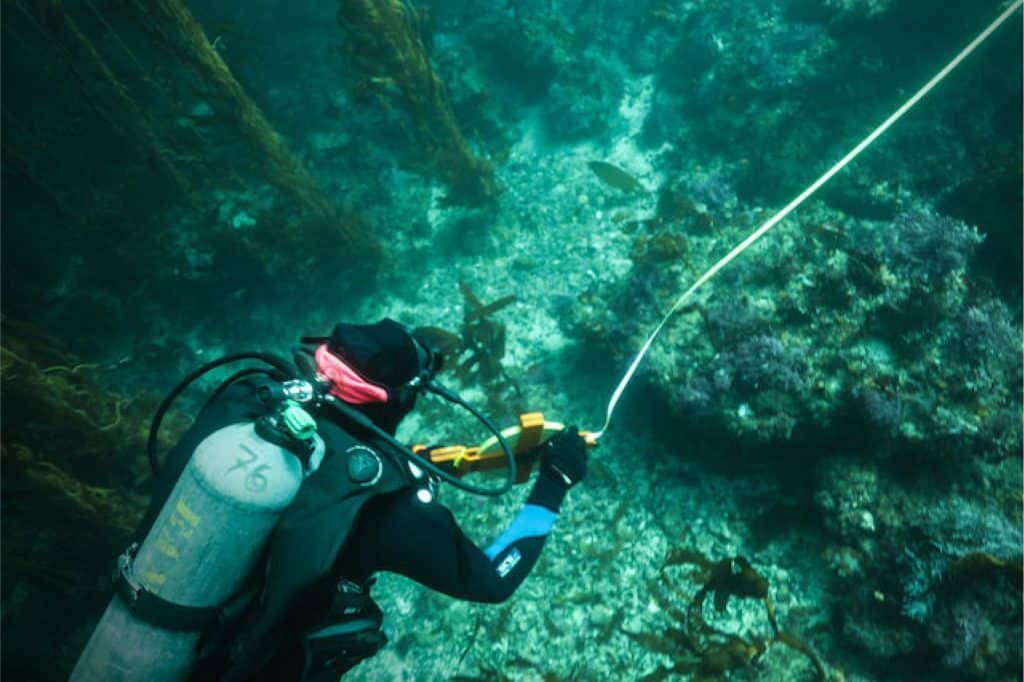
- Partnership for Interdisciplinary Studies of Coastal Oceans (PISCO): This large-scale marine research program focuses on understanding the nearshore ecosystems of the U.S. West Coast. The Foundation has been a core funder of PISCO since its inception in 1999.
- Aldo Leopold Leadership Program (ALLP): A unit of Stanford’s Woods Institute for the Environment, ALLP trains and mentors leading scientists to strengthen their ability to communicate with the media, policymakers, and the public.
- Communications Partnership for Science and the Sea (COMPASS): COMPASS provides ocean scientists with the communications tools and platforms needed to ensure their science is shared in a credible and effective manner.
The Science subprogram does not fund:
- Education, including graduate student theses
- Scientific research, unless decision-makers request certain research be gathered and use those findings within three years in specific decisions, or
- Meetings.
(Photo: Davidson-bubblegum © 2006 NOAA/MBARI)